Science, Religion(s), and Spirit(s) in China
A constructive Chinese theology of creation that begins from the Luminous Religion of the Tang dynasty and stages a trialogue between theology, the natural sciences, and the religious worlds of qi.
Listening for the Spirit where China and Christendom first met — and where they meet again, in the age of artificial intelligence.
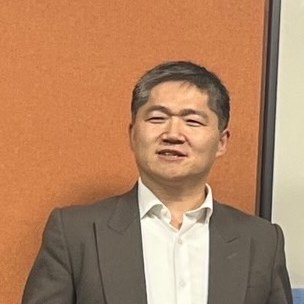
Jacob Chengwei Feng is a systematic and constructive theologian working at the intersection of Chinese intellectual history, Pentecostal pneumatology, and the dialogue between theology and science. His research traces a line that begins with Jingjiao — the Luminous Religion of the seventh-century Tang dynasty, the first Christianity ever to take root in Chinese soil — and reaches forward to the questions our own century puts to the Spirit: artificial intelligence, post-humanism, the cosmos described by a Chinese imagination of qi.
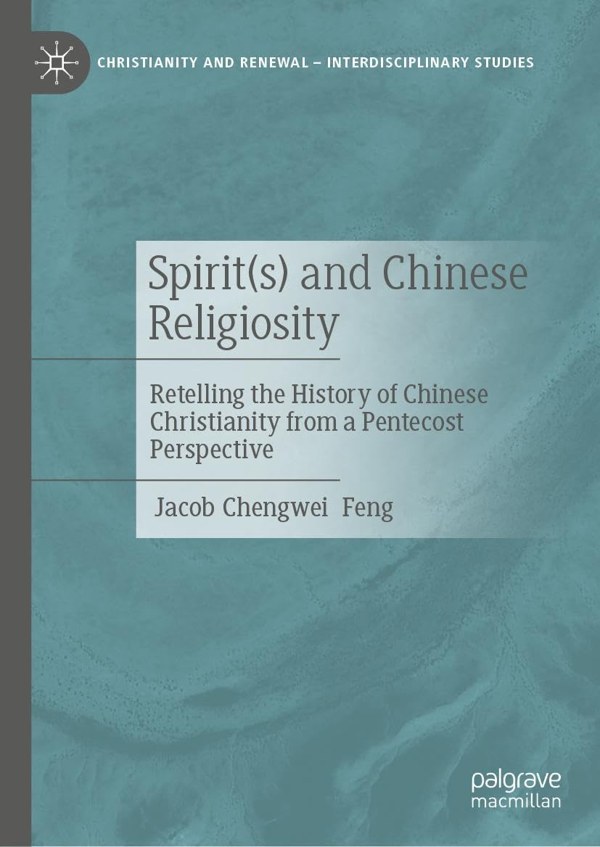
He holds a PhD in Theological Studies from Fuller Theological Seminary and an undergraduate degree from Tsinghua University. He is the author of two open-access volumes — Spirit(s) and Chinese Religiosity (Palgrave Macmillan, 2026) and Science, Religion(s), and Spirit(s) in China (Brill, 2025) — and the editor and translator of the entire Tang Jingjiao corpus.
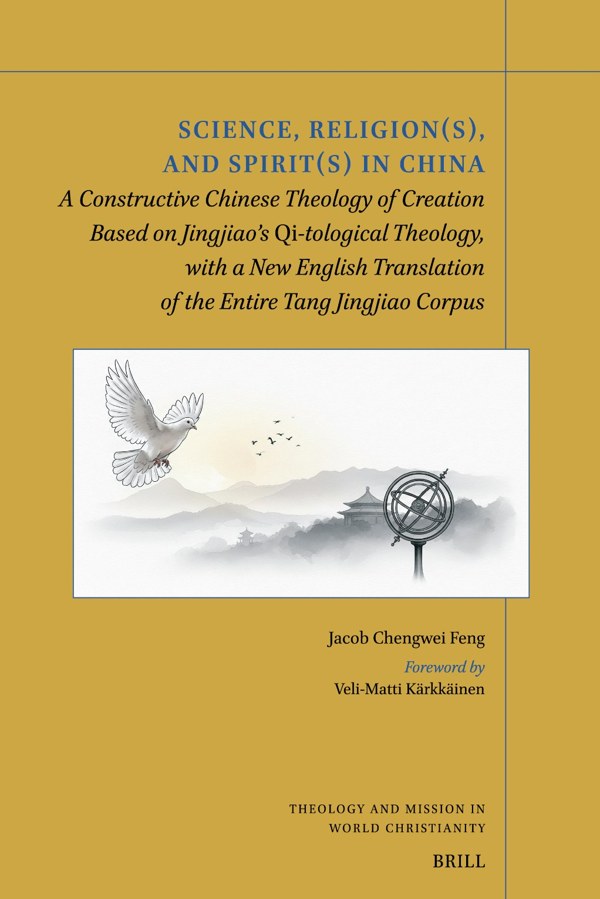
A constructive Chinese theology of creation based on Jingjiao's Qi-tological theology — with a new English translation of the entire Tang Jingjiao corpus.
Read open accessA Chinese theology of creation that reads the cosmos through the ancient category of qi (氣) — breath, person, Spirit at once.
The programLong-form interview with the Hong Kong Institute of Jingjiao Studies on the new translation and constructive program.
Watch the interview"Deificational Spirituality and Ecclesiology: The Contribution of the 'Local Churches' to Global Ecumenism."
Conference circuitRead them online for free. The Brill volume includes a new English translation of the entire Tang Jingjiao corpus.
A constructive Chinese theology of creation that begins from the Luminous Religion of the Tang dynasty and stages a trialogue between theology, the natural sciences, and the religious worlds of qi.
Rewrites the standard history of Christianity in China by reading it from the vantage of Pentecost — taking the spirits, ancestors, and deities of the Chinese religious imagination as theological interlocutors.
One underlying question: where is the Spirit moving in the Chinese imagination?
Building doctrine forward from the sources — Trinity, salvation, the work of the Spirit — rather than reading the tradition as a closed canon. Constructive over commentarial.
Related writing Chapter TwoDoing theology from within the Chinese intellectual tradition. Engaging Jingjiao, Watchman Nee, Witness Lee, and contemporary Sinophone scholarship as primary sources — not translations of the West.
Related writing Chapter ThreeA three-way conversation: Christian theology, the natural sciences, and the cosmologies of non-Christian religious traditions. Where most theology-and-science talk is dyadic, this work is triadic.
Related writing Chapter FourParticularly Daoism, Confucianism, and the Syriac Christianity that first met Tang Daoism in Jingjiao. Ancient encounters as live theological resources for the present.
Related writing Chapter FiveBetween Pentecostal and Reformed and Catholic; between Chinese and Western; between the "Local Churches" tradition of Nee and Lee and the global ecumenical mainstream.
Related writing Chapter SixLeading the Theology Interest Group of the Society for Pentecostal Studies. Pentecostal pneumatology read alongside the Spirit-world of Chinese religious experience.
Related writingA constructive Chinese theology of creation that reads the cosmos through the ancient Chinese category of qi — air, breath, pneuma, person, spirit — and stages it as a third interlocutor between the Christian doctrine of the Spirit and the natural sciences. Developed across the Brill volume, several journal articles, and a growing slate of conference presentations.
A working selection — or open the full list of twenty-seven peer-reviewed articles and six book chapters.


Lectures and interviews — Fuller, Oxford, ANZATS, COSAC, the Hong Kong Institute of Jingjiao Studies.


Upcoming and recent — Cambridge, the Society for Pentecostal Studies, the Society for the Study of Theology, ETS, SBL, Yale-Edinburgh, Tübingen, Hong Kong Baptist, Tsinghua.
A three-institution slate — Fuller, Pepperdine, UC Irvine — anchored by a multi-year DMin cohort on pastoral ministry in the age of rapid technological change.
Fuller Theological Seminary Doctor of Ministry program · Fall 2026 – Summer 2029. Program details at Fuller →
For lecture invitations, collaboration on projects in Chinese theology, Jingjiao studies, or the theology-science-religion trialogue, and inquiries about the DMin cohort.